Breastfeeding is one of the most vital phases in a mother’s life. Breast milk is not just food; it is nutrition, immunity, bonding, and emotional security combined into one natural gift for the newborn. However, many new mothers face challenges related to low milk supply, delayed lactation, physical weakness, stress, hormonal imbalance, or post-delivery exhaustion.
Modern lifestyles, medical interventions, stress, cesarean deliveries, and nutritional deficiencies have increased concerns around inadequate breast milk production. While modern supplements exist, many mothers seek safe, natural, and time-tested solutions that support both mother and baby gently.
This is where Shatavari—one of Ayurveda’s most respected herbs—plays a crucial role.
What Is Shatavari?
Shatavari (Asparagus racemosus) is a classical Ayurvedic herb traditionally known as the ultimate female tonic. The name “Shatavari” roughly translates to “she who possesses a hundred strengths” or “a woman of great vitality.”
For centuries, Ayurvedic physicians have prescribed Shatavari to support:
Female reproductive health
Pregnancy and post-partum recovery
Lactation and breast milk enhancement
Hormonal balance and vitality
Among all its benefits, enhancing breast milk production is one of its most trusted and widely used applications.
Breast Milk Production: Understanding the Natural Process
Before understanding how Shatavari helps, it’s important to know how breast milk production works.
Lactation depends on:
Hormones (mainly prolactin and oxytocin)
Proper nutrition and hydration
Emotional well-being and stress levels
Frequent breastfeeding or pumping
When any of these factors are disturbed, milk supply can reduce. Shatavari works holistically on all these aspects rather than targeting just one pathway.
Why Shatavari Is Considered the Best Ayurvedic Galactagogue
In Ayurveda, substances that promote breast milk are called “Stanya Janana Dravya” (milk-producing agents). Shatavari is considered the most powerful and safest galactagogue.
Ayurvedic Properties of Shatavari:
Rasa (Taste): Sweet, bitter
Virya (Potency): Cooling
Vipaka (Post-digestive effect): Sweet
Effect on Doshas: Pacifies Vata and Pitta
These properties make Shatavari ideal for post-partum women, whose bodies are often depleted, heated, and hormonally imbalanced.
How Shatavari Enhances Breast Milk Production (In-Depth)
1. Stimulates Prolactin Naturally
Prolactin is the primary hormone responsible for milk synthesis. Shatavari contains plant-based phytoestrogens that gently support the endocrine system and help stimulate prolactin release naturally—without forcing hormonal spikes.
This results in:
Gradual increase in milk quantity
Stable and sustainable milk flow
Reduced risk of hormonal side effects
2. Nourishes Breast Tissue and Milk Ducts
Ayurveda emphasizes nourishment (Brimhana) for lactation. Shatavari deeply nourishes:
Breast tissue
Milk ducts
Reproductive organs
Instead of just increasing volume, it improves the quality and richness of breast milk, making it more nourishing for the baby.
3. Improves Quality of Breast Milk
Shatavari supports better:
Fat content
Nutrient density
Digestibility of breast milk
Babies fed by mothers using Shatavari often show:
Better weight gain
Improved digestion
Reduced colic and irritability
This is because Shatavari improves the mother’s digestion and nutrient absorption, which directly reflects in milk quality.
4. Reduces Post-Partum Weakness and Fatigue
Low milk supply is often linked to exhaustion and nutritional depletion after childbirth.
Shatavari acts as a Rasayana (rejuvenator):
Restores strength
Reduces post-delivery weakness
Improves energy and stamina
A stronger mother naturally produces healthier and more abundant milk.
5. Calms the Nervous System and Reduces Stress
Stress is one of the biggest enemies of lactation. Anxiety, lack of sleep, and emotional pressure directly suppress oxytocin—the hormone responsible for milk let-down.
Shatavari:
Calms the mind
Reduces anxiety and mood swings
Supports emotional stability
A calm, relaxed mother experiences better milk flow and easier breastfeeding.
6. Balances Post-Pregnancy Hormonal Fluctuations
After childbirth, hormonal imbalance is common and can interfere with lactation.
Shatavari helps:
Regulate estrogen and progesterone levels
Support smooth hormonal transitions
Reduce post-partum mood disturbances
This hormonal harmony creates an internal environment ideal for consistent milk production.
7. Improves Digestion and Nutrient Absorption
Breast milk is formed from the mother’s nutrition. If digestion is weak, milk supply and quality suffer.
Shatavari:
Strengthens digestive fire gently
Soothes the stomach lining
Improves absorption of nutrients
This ensures that the body has enough raw material to produce adequate milk.
8. Cooling and Anti-Inflammatory Effect
Post-partum inflammation and internal heat can disturb milk secretion.
Shatavari’s cooling nature:
Reduces internal heat
Prevents burning sensations
Supports tissue healing after delivery
This makes it especially beneficial in warm climates and for women with Pitta dominance.
Scientific Perspective on Shatavari and Lactation
Modern studies support traditional Ayurvedic claims:
Increased prolactin levels in lactating women
Improved milk volume in comparison to placebo groups
Better infant growth parameters
No adverse effects on mother or child when used correctly
These findings have made Shatavari a common ingredient in many herbal lactation supplements.
How to Use Shatavari for Enhancing Breast Milk
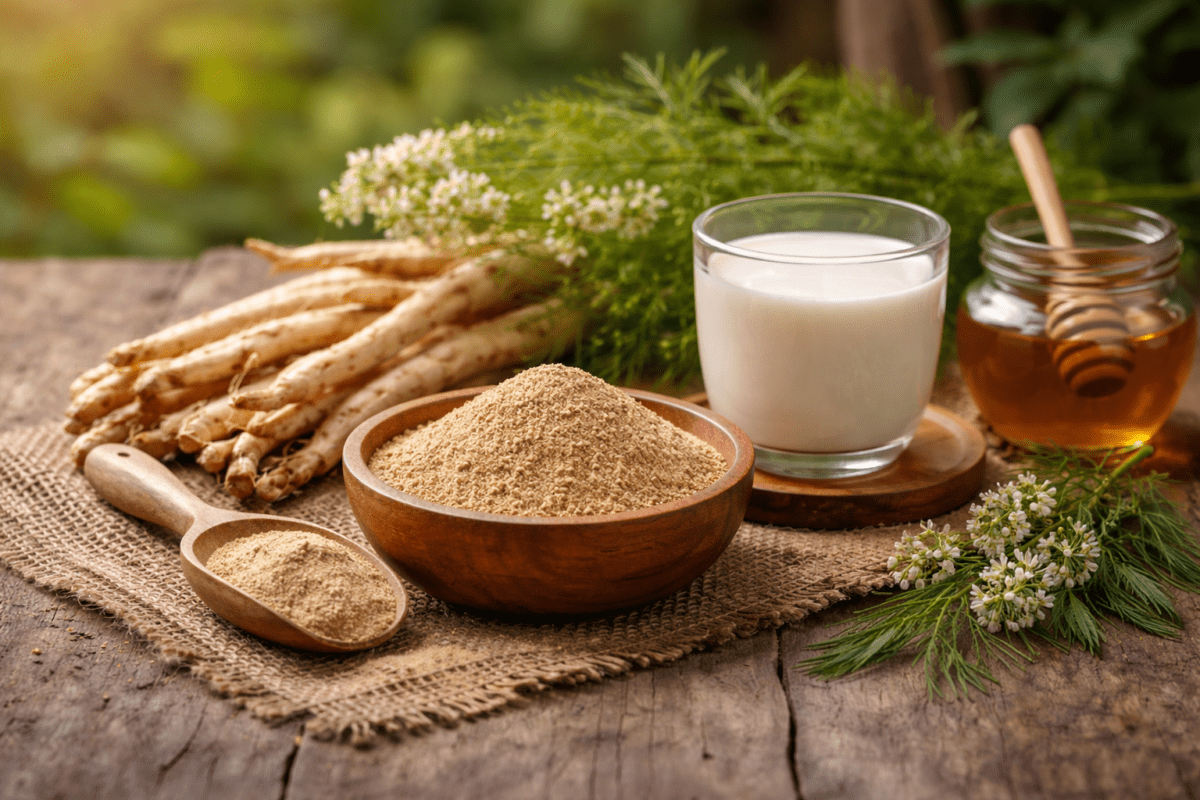
1. Shatavari Powder with Milk
½ teaspoon Shatavari powder
Mix with warm milk
Take once or twice daily
This is the most traditional and effective method.
2. Shatavari with Ghee and Honey (Traditional Method)
Mix Shatavari powder with a little ghee
Add honey (after cooling)
Enhances nourishment and absorption
3. Herbal Formulations
Available as syrups, capsules, or granules
Often combined with other lactation-supporting herbs
Always follow dosage instructions or consult a practitioner.
When to Start Shatavari After Delivery
Can generally be started after delivery once digestion stabilizes
Often recommended from the first or second week post-partum
Suitable for long-term use during breastfeeding
Safety, Dosage, and Precautions
Shatavari is considered very safe, but mindful use is essential:
Use recommended dosage only
Consult a healthcare provider if you have hormone-sensitive conditions
Diabetic mothers should monitor sugar intake if using sweet formulations
Choose high-quality, pure Shatavari products
Shatavari vs Chemical Lactation Supplements
Aspect
Shatavari
Chemical Supplements
Nature
Natural, holistic
Synthetic
Side effects
Minimal
Possible
Long-term use
Safe
Often not advised
Benefits
Mother + baby
Mainly milk quantity
Shatavari focuses on overall maternal health, not just milk output.
Role of Diet and Lifestyle Along with Shatavari
For best results, Shatavari should be combined with:
Adequate hydration
Warm, nourishing foods
Proper rest and sleep
Emotional support and stress management
Ayurveda always emphasizes combination therapy, not isolated remedies.
Conclusion: Shatavari—A Natural Blessing for Breastfeeding Mothers
Shatavari is more than a milk-enhancing herb; it is a complete post-partum support system. By nourishing the body, calming the mind, balancing hormones, and improving digestion, it creates the perfect internal environment for healthy and abundant breast milk production.
In a time when new mothers are overwhelmed with advice and supplements, Shatavari stands out as a gentle, trusted, and time-tested Ayurvedic ally—supporting not just lactation, but the overall well-being of both mother and child.