In the vast treasure of Ayurveda, very few natural substances are as revered and celebrated as Amla, also known as Indian Gooseberry. Though small in size and extremely sour in taste, Amla is considered one of the most powerful rejuvenating fruits in the world. For thousands of years, it has been used in India as a daily health tonic, medicine, beauty enhancer, and longevity promoter.
In ancient Ayurvedic texts, Amla is described as “Amrit Phal”—the fruit of immortality. Modern science now confirms what sages already knew: Amla is one of the richest natural sources of vitamin C and antioxidants, capable of strengthening immunity, improving digestion, enhancing skin and hair health, supporting metabolism, and slowing down aging.
In today’s fast-paced world—marked by stress, pollution, poor diets, and lifestyle diseases—Amla has become more relevant than ever. This blog explores Amla in depth: its origin, Ayurvedic significance, nutritional profile, health benefits, uses for skin and hair, scientific validation, consumption methods, precautions, and its role in holistic wellness.
What Is Amla?
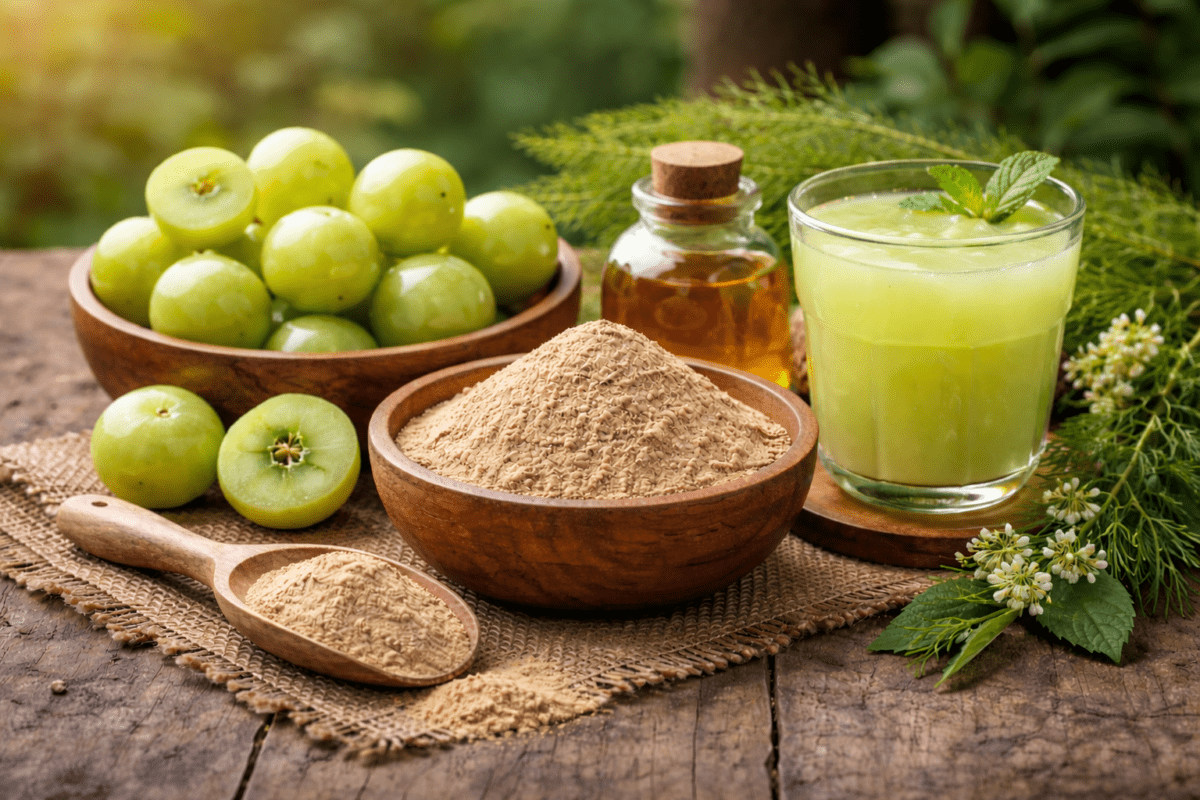
Amla is the fruit of the Phyllanthus emblica tree, native to India and parts of Southeast Asia. The tree is long-living and sacred in Indian tradition, often associated with health, spirituality, and balance.
Key Characteristics of Amla:
Color: Light green to yellowish
Taste: Sour, astringent, slightly bitter
Nature: Cooling
Texture: Fibrous and juicy
Despite its intense sourness, Amla has a sweet post-digestive effect, which makes it unique among fruits.
Amla in Ayurveda: Ancient Perspective
In Ayurveda, Amla is known as Amalaki. It is one of the very few substances that balance all three doshas—Vata, Pitta, and Kapha simultaneously.
Ayurvedic Properties of Amla:
Rasa (Taste): Sour and astringent
Virya (Potency): Cooling
Vipaka (Post-digestive effect): Sweet
Because of these qualities, Amla is classified as a Rasayana—a rejuvenating substance that promotes longevity, vitality, and immunity.
Amla is also the primary ingredient in legendary Ayurvedic formulations like Chyawanprash and Triphala.
Nutritional Powerhouse: What Makes Amla So Special?
Amla’s extraordinary health benefits come from its dense nutritional and antioxidant profile.
Key Nutrients in Amla:
Vitamin C (natural and heat-stable)
Polyphenols and flavonoids
Tannins (Emblicanin A & B)
Iron, calcium, phosphorus
Fiber and amino acids
Unlike synthetic vitamin C, the vitamin C in Amla is naturally protected by tannins, making it highly stable and easily absorbed by the body.
Health Benefits of Amla
1. Powerful Immunity Booster
Amla is best known for strengthening the immune system.
It works by:
Increasing white blood cell activity
Enhancing antioxidant defense
Protecting against infections
Regular consumption helps the body fight colds, coughs, flu, and seasonal illnesses naturally.
2. Richest Natural Source of Vitamin C
Vitamin C plays a crucial role in:
Immunity
Skin health
Wound healing
Iron absorption
Amla provides vitamin C in a natural, non-acidic, and long-lasting form, making it suitable even for people with sensitive digestion.
3. Supports Digestive Health
Amla improves digestion by:
Strengthening digestive fire gently
Reducing acidity and bloating
Supporting healthy gut movement
It is especially helpful in constipation, indigestion, and acid reflux when used regularly.
4. Detoxifies and Strengthens the Liver
Amla acts as a natural liver tonic:
Supports detoxification enzymes
Protects liver cells from damage
Helps in fatty liver and toxin overload
A healthy liver leads to better metabolism, clearer skin, and stronger immunity.
5. Enhances Metabolism and Aids Weight Management
Amla supports healthy weight by:
Improving digestion and metabolism
Regulating blood sugar levels
Reducing fat accumulation
It helps balance appetite and prevents unhealthy cravings.
6. Controls Blood Sugar Levels
Amla is beneficial for people with diabetes or insulin resistance:
Improves insulin sensitivity
Slows glucose absorption
Reduces sugar spikes
Its fiber and antioxidant content support long-term blood sugar balance.
7. Supports Heart Health
Amla contributes to cardiovascular wellness by:
Reducing bad cholesterol (LDL)
Supporting healthy blood vessels
Improving circulation
Regular intake helps reduce the risk of heart-related disorders.
8. Enhances Brain Function and Mental Clarity
Amla nourishes the nervous system:
Improves memory and concentration
Reduces mental fatigue
Supports stress resistance
In Ayurveda, Amla is considered a brain tonic that promotes calm alertness.
9. Anti-Aging and Longevity Benefits
Amla slows aging at the cellular level by:
Neutralizing free radicals
Reducing oxidative stress
Supporting tissue regeneration
This is why it is classified as a Rasayana herb.
Amla for Skin: Natural Beauty from Within
Amla works from inside to improve skin health.
Skin Benefits:
Clears acne and pimples
Improves skin tone and glow
Reduces pigmentation
Delays wrinkles and fine lines
Its blood-purifying and antioxidant properties give skin a natural radiance.
Amla for Hair: The Ultimate Hair Tonic
Amla is one of the most trusted remedies for hair health.
Hair Benefits:
Prevents premature greying
Strengthens hair roots
Reduces hair fall
Promotes thicker and shinier hair
Amla nourishes hair follicles and improves scalp circulation.
Amla in Daily Diet and Traditional Use
Amla has been used in various forms for centuries:
Common Forms:
Fresh fruit
Amla juice
Amla powder
Amla candy
Amla oil
Traditional Uses:
Morning tonic
Seasonal immunity booster
Digestive aid
Hair and skin nourishment
Scientific Validation of Amla
Modern research confirms Amla’s:
Antioxidant capacity
Anti-inflammatory effects
Immune-modulating properties
Metabolic and liver support benefits
Amla is widely studied in nutraceutical and preventive medicine fields.
How to Consume Amla for Best Results
1. Fresh Amla
Best consumed in season
Can be eaten raw or grated
2. Amla Juice
20–30 ml diluted with water
Best taken in the morning
3. Amla Powder
½ to 1 teaspoon with warm water or honey
4. Herbal Formulations
Chyawanprash
Triphala
Best Time to Take Amla
Morning on empty stomach for detox and immunity
Before meals for digestion
At night (with care) for gut health
Consistency matters more than timing.
Precautions and Things to Keep in Mind
Though Amla is very safe, some precautions apply:
Excess may increase dryness in very cold body types
Use cautiously in extreme cold conditions
Diabetics should monitor sugar intake if consuming sweetened forms
Always choose pure, high-quality Amla products
Amla vs Synthetic Supplements
Aspect
Amla
Synthetic Supplements
Source
Natural
Artificial
Absorption
High
Variable
Side effects
Minimal
Possible
Holistic benefits
Yes
Limited
Amla works gently and deeply over time.
Role of Amla in Modern Wellness
Today, Amla is used in:
Immunity boosters
Hair oils and shampoos
Skin care products
Herbal supplements
It fits perfectly into clean, sustainable, and preventive wellness lifestyles.
Why Amla Is Essential for Long-Term Health
Amla supports:
Disease prevention
Healthy aging
Mental clarity
Balanced metabolism
It strengthens the body without dependency.
Conclusion: Amla – The Fruit of Complete Balance
Amla is not just a fruit—it is a philosophy of health. It teaches us that true wellness comes from balance, nourishment, and consistency. By strengthening immunity, improving digestion, enhancing skin and hair, supporting metabolism, and slowing aging, Amla stands as one of nature’s most complete health solutions.
In a world seeking shortcuts to health, Amla reminds us that small daily habits with natural remedies create lifelong wellness.